
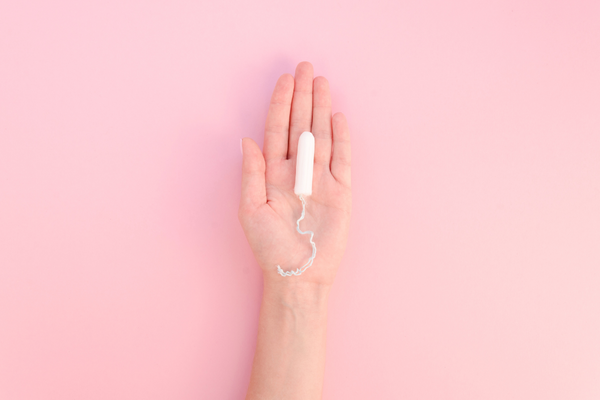
Have you ever had the experience of an uncomfortable tampon? Or one that looks as though only the side half of it has absorbed anything? Why do tampons go sideways?
There are few reasons why tampons move about:
#1 There’s more space inside the vagina than you think
The vagina is surprisingly wide and stretchy. This is essential for babies heads to come out. However, also leaves plenty of room for things to move about. Especially for tampons to go sideways.
I think we mentally picture the vagina as a narrow tube – rather like a hosepipe. However, though you can’t see much at the opening, inside the vagina there is quite a decent space. The vagina is a tube, but not an evenly shaped one. It’s more like a squashed tube, wider side to side than top to bottom.
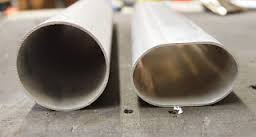
This clever shape helps to let a babies head out without damage to the vagina itself.
The pelvic floor muscles should support the tube from below and from the sides. However, the pelvic floor muscles can be stretched and weakened by:
- pregnancy
- childbirth
- straining for constipation
- pressure from chronic coughing
- or lots of lifting
As a result the vagina tube can feel more “gapey” or spacey – and it’s easier for tampons to drift off centre or tilt to one side.
#2 The cervix deflects the tampon sideways
If the end of the tampon comes up against the cervix it can tilt. Maybe off sideways giving you inadequate protection. Or giving that ‘half used’ look when you remove it.
The cervix is the opening to the uterus (womb). It sits right at the back of the vagina tube. It dangles down from the top of the tube (similar to the way your epiglottis sits right at the back of your mouth). The cervix is the size and shape of a nose. You can put your finger inside and find it.
The cervix is pretty solid. Though it pushes up out of the way during sex, it is quite easy to accidentally knock into it by accident when inserting a tampon.
# The tampon annoys the cervix
Have you ever put a tampon in but barely 5 minutes later you have an overwhelming desire to pull it back out ? It is just not right, or downright uncomfortable, almost as if your body is rejecting it?
This is because the cervix is the only bit inside with decent nerve endings. If you knock it during sex it you might get a short sharp mild pain and find yourself shifting position. If a tampon is relentlessly pressing on the cervix you get this strong urge to bear down and feel that the tampon is pushing out or that you need to take it out. Have you ever had this sensation?
A video to show why tampons go sideways
Are you a visual person? I use a 3D model (and a piece of paper!) in this video to explain to Stephanie Taylor from Kegel8 how our internal organs are supported by our pelvic floor:
Tips to get tampons in the right place:
- Don’t rush the process (mums! you know you do)
- Visualise what you are doing. Keep contact with the back wall of the vagina (the bowel side) as you are putting the tampon in and it will end up underneath the cervix rather than on it. Aim towards your tailbone
- Not all tampons are the same. Some types expand widthways but others expand lengthways so they can effectively push themselves out as they become elongated when full. If you can’t picture what yours do, drop one in water and see what shape it becomes.
- Applicator tampons give you a bit more option to position the tampon before you let go – nice to use for the beginnings and ends of periods when the vagina is a bit drier and less easy to slide tampons in
- Pop a dab of lubricant (water-based) on the end of the tampon to help it slide in more easily
- If you feel your cervix is sitting very low since your baby try using a menstrual cup (like a MoonCup ) instead of tampons – these are designed to sit closer to the opening of the vagina rather than deep inside (more like the position of a cork in a bottle).
- make time for your pelvic floor exercises with particular emphasis on the sides. Follow the videos in our Pelvic Floor School.
How have you got on with returning to having periods and using tampons and sanitary pads? Any questions? Join the conversations on instagram @propelvic
Content Disclaimer:
The information contained above is provided for information purposes only. Professional advice should be obtained before taking or refraining from taking any action as a result of the contents of this article. Amanda Savage disclaims all liability and responsibility arising from any reliance placed on any of the contents of this article, blog or video.